When Good People Become Poor Leaders: Closing the Gap Between Personal Integrity and Executive Effectiveness

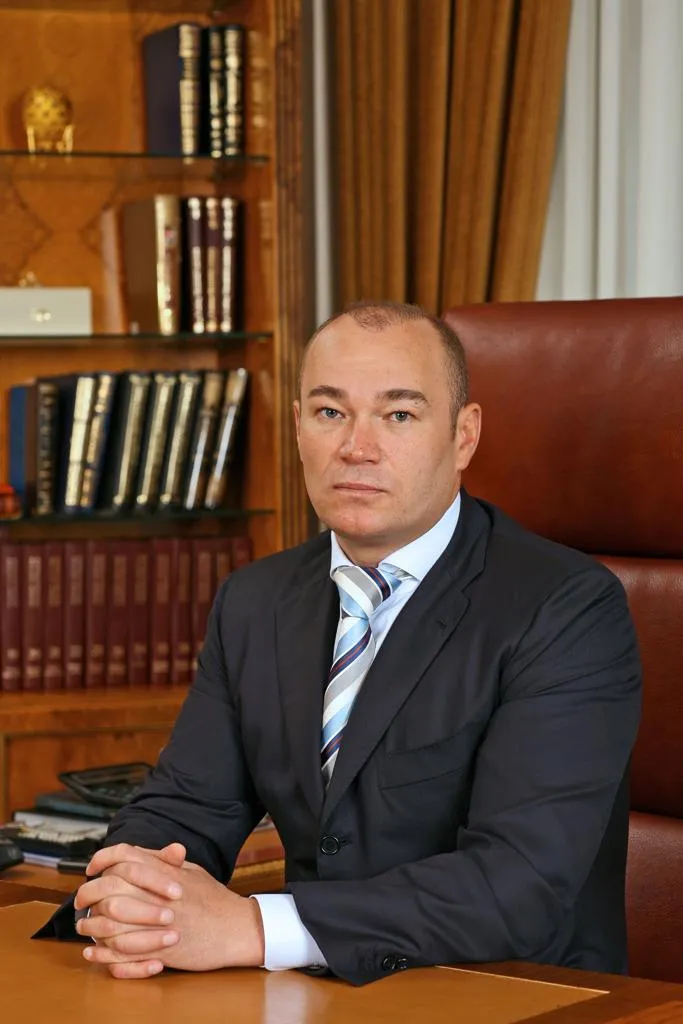
Photo: executive leader mentoring professional business meeting corporate office, via cdn.tandemcoach.co
Across boardrooms and corner offices throughout the United States, a quiet and costly mistake repeats itself with remarkable consistency. A high-performing employee earns a reputation for honesty, fairness, and sound moral judgment. Leadership takes notice. A promotion follows. And then, somewhere between the individual contributor role and the executive suite, something goes wrong.
This is not a story about corruption. It is a story about a far more nuanced problem: the assumption that personal ethics and principled leadership at scale are interchangeable. They are not.
The Confusion Between Virtue and Capability
Personal integrity is a necessary condition for ethical leadership. It is not, however, a sufficient one. An individual can be deeply honest, reliably fair in one-on-one interactions, and genuinely committed to doing what is right—and still be ill-equipped to lead an organization of fifty, five hundred, or five thousand people through competing priorities, resource constraints, and stakeholder pressures that have no clean moral resolution.
The confusion arises because integrity is visible and measurable at the individual level. When an employee refuses to cut corners, speaks up in meetings, and treats colleagues with consistent respect, those behaviors are observable. They become proxies for leadership potential. But executive decision-making operates in a fundamentally different environment—one defined by incomplete information, organizational politics, and the reality that nearly every significant decision disappoints someone.
The skills required to navigate that environment are not the same as the skills required to be a good person.
The Blind Spots That Emerge With Power
When principled individuals move into authority, several predictable blind spots tend to surface.
The Certainty Trap. Employees who have built their reputations on sound moral judgment often carry that confidence into executive decision-making. The problem is that ethical clarity at the individual level can evolve into a kind of moral rigidity at the organizational level. Leaders who are accustomed to knowing the right answer may struggle to sit with ambiguity, seek dissenting perspectives, or make pragmatic compromises without viewing them as personal failures.
The Avoidance of Necessary Conflict. Many ethical employees rise precisely because they are collaborative and collegial. Those same tendencies, unchecked at the executive level, can produce leaders who avoid difficult conversations, delay hard decisions, and allow underperformance to persist rather than risk damaging relationships. Kindness, untempered by accountability, becomes a liability.
Scaling Blind. A leader who has personally modeled integrity in every interaction may genuinely believe that good culture will replicate itself organically. It rarely does. Principled behavior must be institutionalized through systems, incentives, and processes—none of which are intuitive to leaders whose ethical framework has always been personal rather than structural.
The Feedback Vacuum. Power changes the information environment. People tell executives what they want to hear. Leaders who have always relied on honest feedback from peers suddenly find themselves operating in an echo chamber—and may not recognize it.
What Principled Leadership at Scale Actually Requires
Leading ethically across an organization demands a distinct set of competencies that must be deliberately cultivated. They include the capacity to make decisions under conditions of genuine uncertainty; the discipline to build accountability structures rather than rely on personal relationships; the willingness to hold other leaders to behavioral standards even when doing so is uncomfortable; and the sophistication to recognize when organizational pressures are subtly reshaping one's own values.
None of these capabilities develop automatically. They require intentional preparation.
A Practical Framework for Developing Leaders Who Hold Their Values Under Pressure
Organizations that consistently produce principled executives share several practices worth examining.
Pre-promotion scenario testing. Before elevating high-integrity employees into leadership roles, expose them to realistic dilemmas that have no clean answer. Observe how they reason through competing obligations—not just what conclusion they reach, but how they engage with the complexity. Moral certainty in the face of genuine ambiguity is a warning sign, not a qualification.
Structured feedback mechanisms. Build 360-degree feedback processes that reach executives regularly and anonymously. Principled leaders should actively want this information. Organizations that normalize upward feedback protect their leaders from the distortions that power creates.
Peer accountability cohorts. Connect emerging executives with peers inside and outside the organization who are committed to the same values. Isolation accelerates drift. Community reinforces standards.
Systems thinking as a leadership competency. Require that leaders in development learn to translate personal values into organizational design. Ethical behavior must be embedded in how performance is measured, how decisions are escalated, and how misconduct is addressed—not simply modeled from the top.
Explicit coaching on the transition. Many organizations promote capable individuals and assume the role will teach them what they need to know. It will—but often through costly failures. Targeted executive coaching that specifically addresses the shift from individual contributor to organizational leader accelerates development and reduces the risk of early missteps.
The Organizational Imperative
For leaders committed to building organizations that perform with integrity over the long term, the stakes here are significant. When ethical employees are promoted without adequate preparation, two outcomes are equally damaging: they either abandon their values under pressure without fully realizing it, or they cling to them so rigidly that they become ineffective leaders. Neither outcome serves the organization, its employees, or the communities it operates within.
The answer is not to stop promoting principled people. The answer is to stop treating personal integrity as a proxy for executive readiness, and to invest deliberately in the development that bridges the gap between the two.
Good people are the right raw material for principled leadership. But raw material, without refinement, rarely becomes what it has the potential to be.